
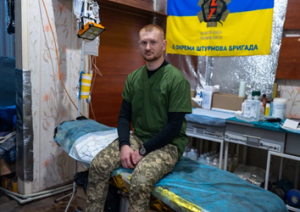
Amidst the ceaseless bloodshed and tragedy endured by the Ukrainian army, a health challenge of international concern continues to fester. This is, of course, in reference to the most fearsome acronym in global health: AMR.
The health systems across Ukraine, overwhelmed by the wounded and maimed, provide the unfortunately fertile ground for accelerated antimicrobial resistance. Increased use of antibiotics with inadequate or non-existent diagnostic testing; unsanitary living or care conditions; and the interruption of AMR programmes and surveillance measures are all consequences of living and treating soldiers and civilians in war. Ukraine’s three-year struggle is no different.
The statistics make for sober reading: in one hospital, over 80% patients presenting have infections which are resistant to antibiotics. It is likely a similar, grim picture elsewhere across the war-torn nation.
The Sunak and Starmer Governments have been committed to combatting the issue in a number of ways:
- In January 2025, the UK and Ukraine formalised a long-term partnership aimed at enhancing healthcare resilience, emphasising improving infection control in Ukrainian hospitals and expanding access to rapid diagnostic tools and effective antibiotic treatments.
- DHSC funding for programmes such as the Global Research on Antimicrobial Resistance (GRAM) project and Global Antibiotic Research & Development Partnership (GARDP) to help countries, including Ukraine.
- In February, the Defence Secretary announced the doubling of funding to £40 million for Project Renovator, which draws on the UK’s leading defence medical expertise to expand Ukraine’s military rehabilitation and medical services.
- Millions of pounds worth of urgent medical equipment to support Ukraine’s capacity to treat severe infections and manage AMR since February 2022.
The UK’s efforts to support Ukraine since it was invaded should be applauded. While armaments may be key to stopping Russian aggression, these investments save lives both in Ukraine and, in time, here in the UK.
Politicians are rightly waking up to this issue.
Danny Chambers MP has been a strong AMR advocate since his election last summer. He has consistently raised the problem of AMR, including its growth in Ukraine, in parliamentary debates. As part of the APPG on AMR, he also contributed to the group’s publication, “AMR and Conflict: National security amid rising tide of drug-resistant infections – lessons from Ukraine.”
In recent weeks, Shadow Foreign Office Minister, Wendy Morton MP, has posed several written questions pertaining to AMR and global health — with one specifically aimed at the UK’s efforts to mitigate AMR in Ukraine. We are currently working with Mr Chambers and have written to Ms Morton to offer our support.
It is reassuring that all political parties are not only publicly acknowledging the problem of antimicrobial resistance (AMR), but are also working together across party lines, even amid the usual political friction. Building a strong crossbench political consensus will bolster the health of an embattled nation, benefitting patients in both Cardiff and Kharkhiv.
