
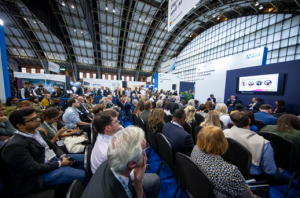
BIVDA’s own Beth Loudon attended the NHS Confed conference in Manchester last week and provided a summary of some of the key messages and themes.
The event was well-attended with over 9,000 delegates registered, complete with multiple stages prepared for the conference’s prestigious line-up of speakers. The main themes over the course of the conference were innovation, addressing health inequalities and implementing digital solutions.
As expected, there were many references to the NHS 10-year plan, which is expected to contain the ambition for radical service design which is decentralised, neighbourhood-based and supported by tech solutions.
Health and Social Care Secretary Wes Streeting made an appearance on Day 2. He outlined his desire for greater flexibility for Providers and an NHS that is not managed by the centre. However, he did state that he would like to see the NHS using its ‘central procurement muscle’. He referenced genomics as part of a futureproofed NHS and as an example of the way that services should evolve to deliver care that citizens deserve.
Whilst there was a general consensus that the NHS was well-funded in the Spending Review compared to other public services, Jim Mackey (NHSE) and Mathew Taylor (NHS Confed) both spoke of the need for private finance to support the level of reform that is needed. Mr Streeting somewhat disagreed with this position, declaring himself ‘uncharacteristically cautious’ on the subject of PFI.
The keynote speakers did not shy away from the fact that public confidence in the NHS is as low as it has ever been, that the scale of reform required is extensive, and that the NHS is still struggling to get even very basic digital solutions in place. However, it is also very clear that this will not be solved by central control and command, and that the whole system, including industry, will need freedom to act in order to realise the ambitions cited by Mr Streeting and senior NHS leaders.
