
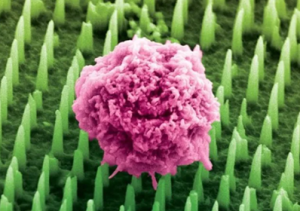
Scientists at King’s College London have developed a patch containing tens of millions of microscopic nanoneedles that could replace traditional biopsies. This painless, non-invasive technology offers an alternative for millions of patients undergoing biopsies to diagnose or monitor diseases like cancer and Alzheimer’s.
Traditional biopsies, while common, are invasive, painful, and limited in how often they can be used, especially in delicate organs like the brain. In contrast, the nanoneedle patch collects molecular data without removing tissue, enabling repeated, real-time monitoring without causing harm to the patient.
Each nanoneedle is 1,000 times thinner than a human hair. In preclinical trials on brain cancer tissue from humans and mice, the patch extracted molecular fingerprints such as lipids, proteins, and mRNAs, without damaging cells. These samples are then analysed with mass spectrometry and AI to detect tumours, track treatment responses, and monitor disease progression.
This approach could transform disease diagnostics and treatment. During brain surgery, for example, applying the patch could yield results in just 20 minutes, helping surgeons make faster, more accurate decisions about removing cancerous tissue. By enabling earlier diagnosis and more regular monitoring, the nanoneedle patch represents a major step forward in personalised, less invasive healthcare.
