
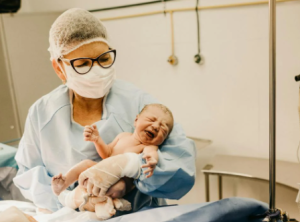
Over the next decade, the NHS in England plans to sequence the DNA of every newborn to identify their risk of developing hundreds of genetic conditions.
This initiative is aligned with the government’s strategy to shift healthcare towards prediction and prevention, set to be reflected in the upcoming NHS 10-Year Plan. This includes a £650 million investment in DNA research which will benefit all patients by 2030.
Commenting on the announcement, Health Secretary Wes Streeting highlighted the potential of genetic technologies to help the NHS proactively address illnesses rather than responding to them after they appear. This follows a previously announced Generation Study involving the genetic sequencing of up to 100,000 babies, launched in October.
Newborn DNA screening will be conducted by analysing blood taken from the umbilical cord shortly after birth, providing a complete genetic profile. This will be used to detect their likelihood of developing any of the 7,000 known single-gene disorders. The ongoing NHS study targets those that appear in early childhood and can be effectively treated.
Currently, babies undergo a heel-prick test that screens for nine serious illnesses, including cystic fibrosis. However, whole genome sequencing can reveal a broader range of potential genetic issues, including muscular dystrophy, certain liver and kidney diseases.
This funding will also help Genomics England expand its research efforts, with the goal of assembling a genetic database of over 500,000 genomes by the end of the decade.
