
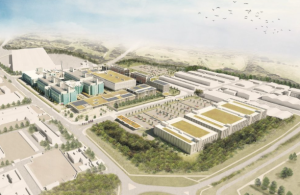
The government is investing billions of pounds into a national biosecurity centre (NBC) in Harlow, Essex, set to be the largest of its kind in Europe. This aims to ensure the UK is better prepared for future pandemics and emerging biosecurity risks.
The project will be given including £250 million over this Parliament to bring vital research and testing, currently split across UK Health Security Agency (UKHSA) sites in Porton Down and Colindale, under one roof.
Once complete, the NBC will create around 1,600 new jobs to support construction of the site and enabling the development of new treatments and vaccines that could save countless lives.
The NBC will create exciting new partnerships between UKHSA scientists and industry — paving the way for potential research breakthroughs, including in the realm of infectious diseases, environmental health and behavioural sciences. Harlow will deliver state-of-the-art highly secure laboratories that will be used to research the most dangerous and new diseases — including at biosecurity level 4.
While this is a positive development, the project, which has been underway for several years, has drawn criticism for its lack of progress. Construction has effectively stopped since 2022 with UKHSA insisting that although the Harlow site is the best location for the project, the original £2 billion budget is now insufficient. Originally due to be open in 2021, the programme now anticipates that the site will begin operations in the mid 2030s and be fully operational by 2038.
A recent report from the National Audit Office concluded that “the UK’s future resilience to dangerous diseases and value for taxpayers’ money are both being undermined by failures in decision-making for a key part of the national infrastructure.”
